
Blockchain (Level-2)
Take your blockchain knowledge to the next level by learning advanced transaction security, mining, consensus mechanisms, smart contracts, Web3 integration, blockchain synchronization, Merkle Trees, and real-world attack prevention through practical implementation.
Blockchain (Level 2)
Blockchain Level 2 is an advanced course designed for learners who already understand blockchain fundamentals and want to build production-ready blockchain systems. Throughout this course, you will learn how secure transactions are authorized using digital signatures, how blockchain networks prevent double spending, and how Merkle Trees enable efficient transaction verification.
We have Trained professionals from











Learn to upgrade the existing Transaction class by adding advanced features required for secure blockchain transactions.
Explore how to add a sender's public key and digital signature to verify the authenticity of every transaction.
Learn to include transaction fees and transaction nonce to improve transaction processing and security.
Understand how to verify sender address ownership before allowing a transaction to be processed.
Learn to identify and reject expired transactions to maintain blockchain integrity.
Explore techniques to prevent replay attacks by ensuring that previously processed transactions cannot be reused.
Learn to create a transaction status handling system for tracking pending, confirmed, rejected, and failed transactions.
Learn to calculate account balances directly from the complete blockchain transaction history.
Explore how to build an account-state database for faster balance verification and account management.
Learn to check pending outgoing transactions before approving new transactions.
Understand how to reject transactions with insufficient account balances before they are added to the blockchain.
Learn techniques to prevent duplicate spending and protect the network from double-spending attempts.
Explore the differences between Account-Based and UTXO-Based blockchain implementations and understand how both approaches manage balances.
Learn to build a complete Merkle Tree in Python using blockchain transaction data.
Understand how to calculate the Merkle Root for secure block verification.
Yes. Tech Cryptors Training Academy is an ISO 9001:2015 CERTIFIED COMPANY under IAF. CERTIFICATION will have the significance of the above.
We conduct this course in BOTH online and offline modes. You can choose the mode suitable for you, even you can SWITCH modes for a couple of lectures in case of any personal issues and emergencies.
In one batch we allow MAXIMUM 4 students Because we believe that to have a better understanding and to excel in this course PERSONAL ATTENTION is needed.
We have new batches starting every 15 days, But you should register asap for your desired date because our batches are filling fast. Batch timings are also kept AS PER YOUR TIME CONVENIENCE, we don’t have any rigid preassigned slots.
Well, you can SCROLL DOWN and click on WHATSAPP CHAT text OR CLICK HERE to talk with our customer care executive. We are happy to help you with all of your questions and details.
Learn to generate a Merkle Proof for a selected transaction within a block.
Explore how to verify a transaction without processing the entire block using Merkle Proofs.
Learn how modified or tampered transactions are detected through changes in the Merkle Tree.
Visualize the different Merkle Tree levels to understand how blockchain data is efficiently organized and verified.
Learn to create two competing blockchain branches to understand blockchain forks.
Explore how to calculate cumulative chain work for multiple blockchain branches.
Learn how blockchain nodes select the valid chain with the highest accumulated work during consensus.
Understand the complete process of synchronizing a new blockchain node with an existing network.
Learn how to return transactions from rejected blocks back to the mempool for future processing.
Explore the importance of validating the Genesis Block before blockchain synchronization begins.
Learn to implement dynamic mining difficulty that automatically adjusts based on mining conditions.
Explore how miners prioritize blockchain transactions according to transaction fees.
Learn to create controlled Coinbase Transactions for distributing mining rewards.
Understand how to restrict mining reward amounts according to blockchain rules.
Simulate multiple miners competing to mine new blockchain blocks.
Compare the mining performance of different miners under various network conditions.
Learn to calculate the approximate hash rate to measure mining efficiency and performance.
Learn to build a simplified Proof-of-Stake (PoS) blockchain simulation.
Explore how validators are registered along with their staking amounts.
Learn how validators are selected using weighted stake-based selection.
Understand how selected validators validate and approve proposed blockchain blocks.
Learn how dishonest validators are penalized for malicious or invalid behavior.
Compare the working principles and outcomes of Proof of Work (PoW) and Proof of Stake (PoS) consensus mechanisms.
Learn the fundamentals of Solidity for writing blockchain smart contracts.
Explore Remix or Hardhat for developing, compiling, and testing smart contracts.
Learn how to use Ganache as a local blockchain environment for development and testing.
Understand how to connect blockchain applications using MetaMask.
Learn to interact with blockchain networks using Python Web3.py.
Write a simple Solidity Smart Contract from scratch.
Compile and deploy a smart contract on a local blockchain environment.
Learn to connect Python applications with deployed smart contracts using Web3.py.
Read smart contract data directly from Python applications.
Send blockchain transactions to smart contracts using Python.
Learn to listen for and process smart contract events.
Build a simple Token Transfer or Certificate Verification Smart Contract.
Learn to submit a transaction with an invalid digital signature to understand blockchain signature validation.
Explore how transaction replay attacks work and how blockchain networks prevent them.
Simulate a double-spending attack to understand its impact on blockchain systems.
Learn what happens when a block contains an excessive mining reward and how blockchain validation prevents it.
Explore the effects of modifying a historical blockchain block and understand why blockchain data becomes invalid after tampering.
Learn how a malicious blockchain node attempts to connect and interact with the network.
Implement blockchain validation rules that successfully detect and prevent each of these security attacks.
Click Here to view a complete step-by-step guide on how to install Python
Click Here to view a complete step-by-step guide on how to install PyCharm
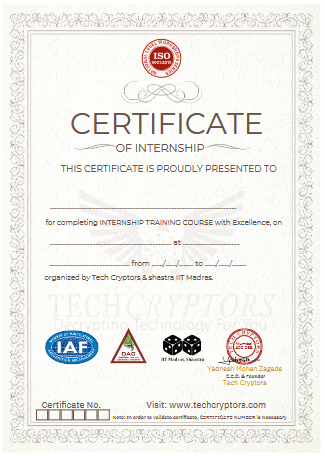
Note For Certification
Earn Certificate
Share Your Achivement
Validated by Ethereum
Original Price
₹30,999 /Course
- Max 4 Students per batch
- 1 to 1 Interaction
- Online & Offline mode
- only Video Training
- limited sessions
- Big batches
Current Price
₹21,999 /Course
- Industry level content
- 100% Practical Training
- Experienced Trainers
- Certification for Course
- Corporate Level Examples
- Many other discounts ASK NOW

Reattempt
₹0/Course
- Free Reattempting of Course
- Long Term Support after Completion
- Free Doubt Solving Sessions / Chats
- Discount for Next Courses
- Real-Time Tasks
- Suggestions & Carrer Counselling
Original Price
₹26,999 /Course
- Max 4 Students per batch
- 1 to 1 Interaction
- Online & Offline mode
- only Video Training
- limited sessions
- Big batches
Current Price
₹19,999 /Course
- Industry level content
- 100% Practical Training
- Experienced Trainers
- Certification for Course
- Corporate Level Examples
- Many other discounts ASK NOW

Reattempt
₹0/Course
- Free Reattempting of Course
- Long Term Support after Completion
- Free Doubt Solving Sessions / Chats
- Discount for Next Courses
- Real-Time Tasks
- Suggestions & Carrer Counselling